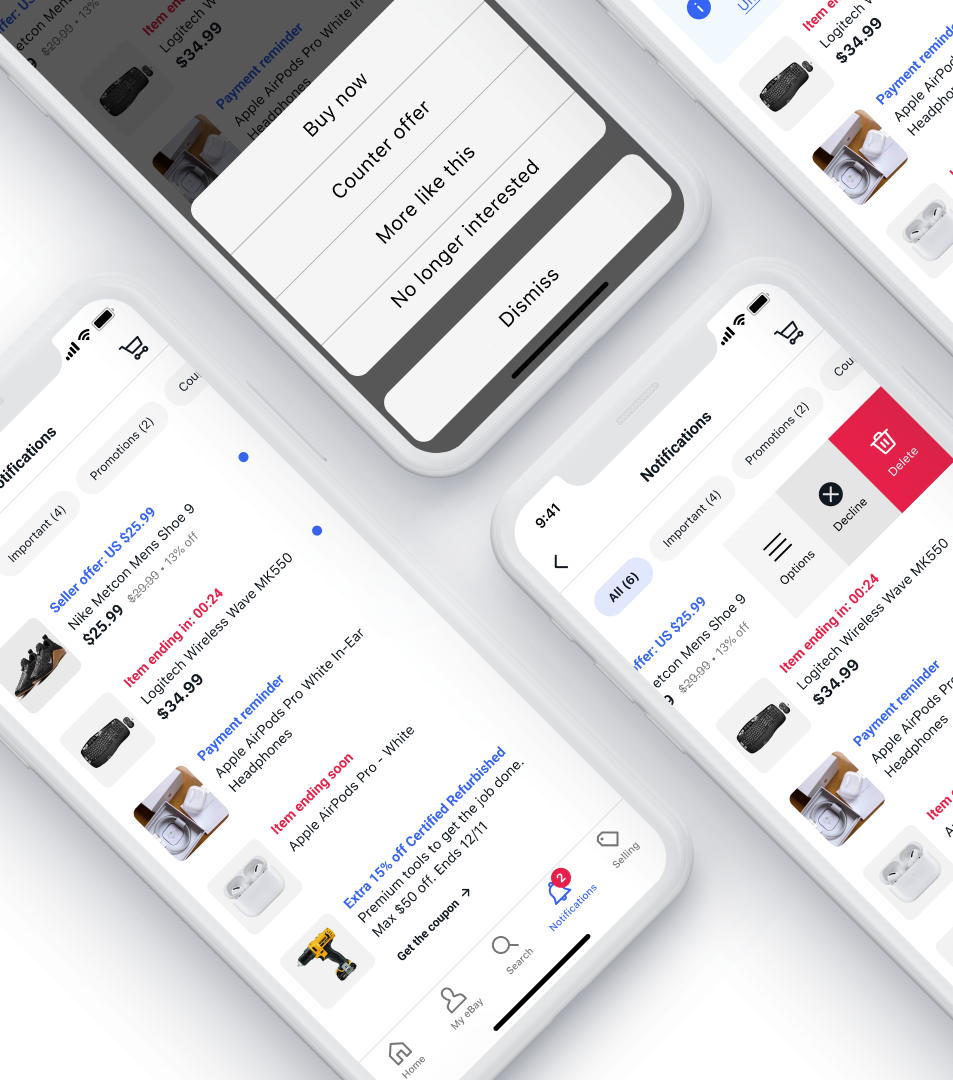
Lead Product Designer
I led product discovery, interaction design, and prototyping for a notifications system spanning multiple buyer touchpoints across the eBay app.
- UX Product Discovery
- UX Strategy
- Interaction Design
- Prototyping
- Cross-functional Alignment
The Engagement Gap
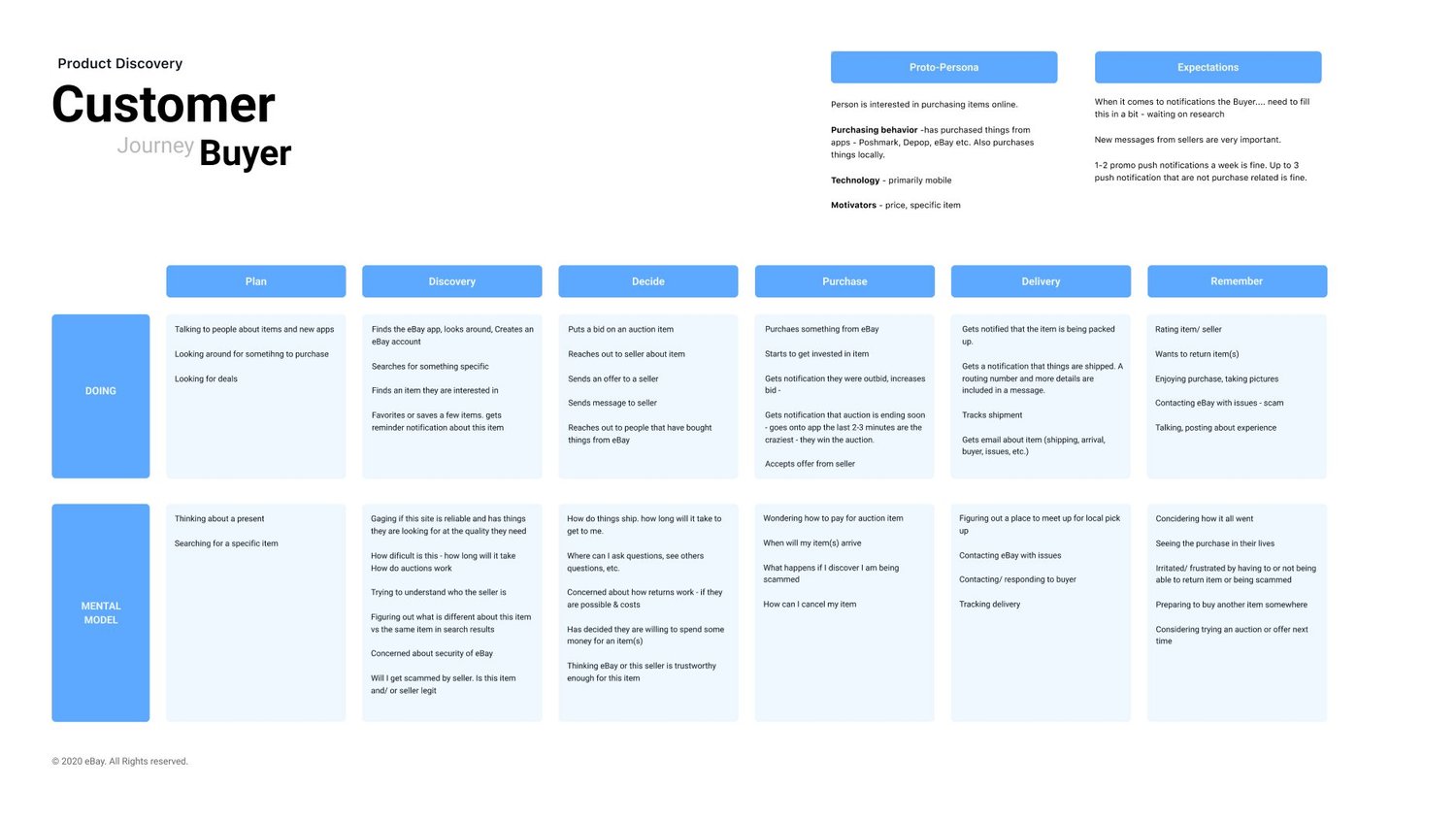
Our product team identified a critical gap in customer engagement that directly impacted Gross Merchandise Bought (GMB). Buyers were missing key updates about their transactions, which led to abandoned purchases and lower retention.
- Buyers missing item availability, price drop, and order status updates
- Notifications felt noisy, generic, and poorly timed
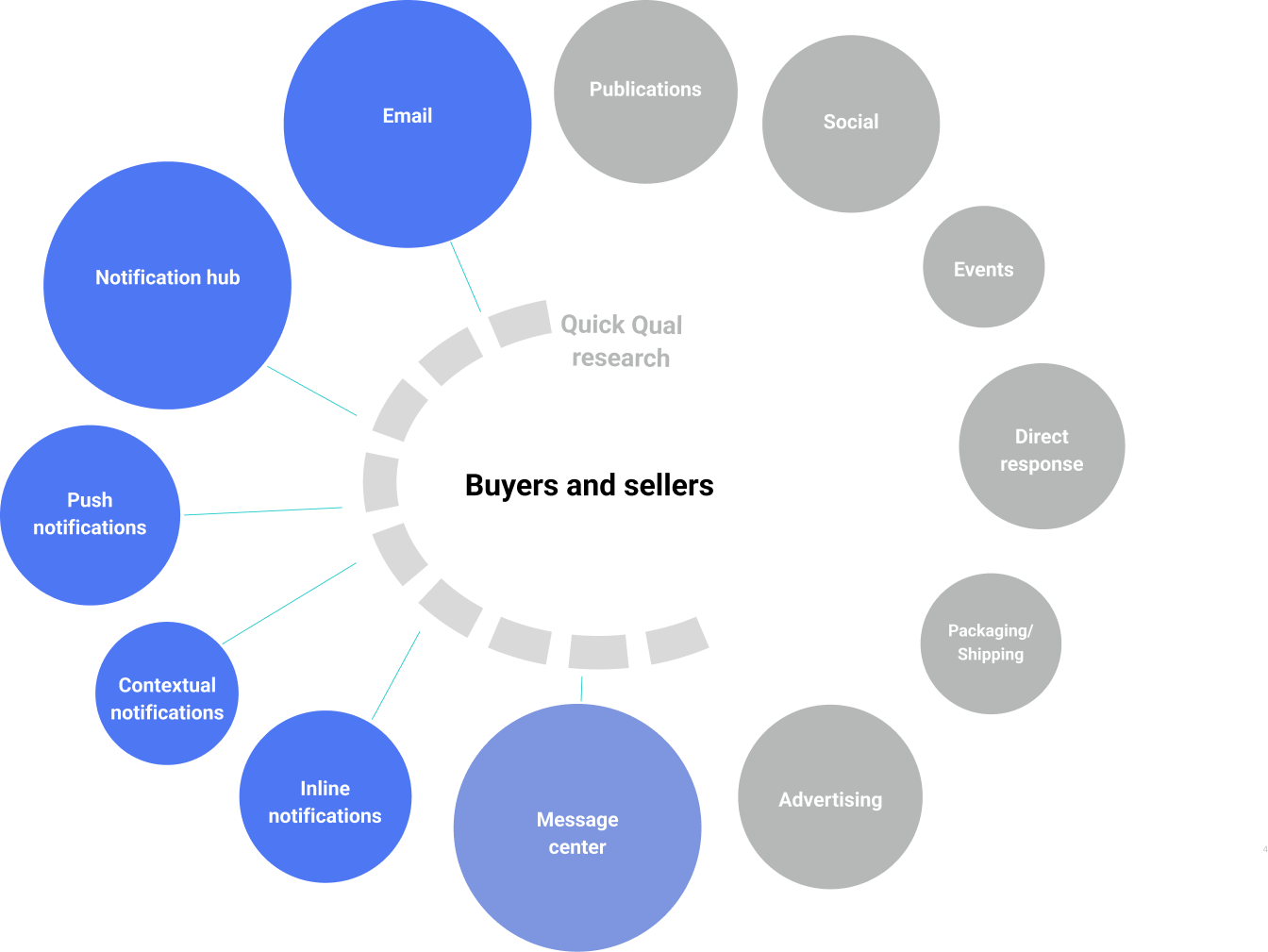
- Inconsistent delivery across push, email, and in-app channels
- No clear framework for prioritizing which updates mattered most
The challenge was not adding more notifications — it was rethinking how and when a buyer should hear from us so every message felt earned and useful.
- A prioritization model for competing notification types
- Consistent timing and tone across channels
- Cross-functional alignment with growth, engineering, and trust & safety
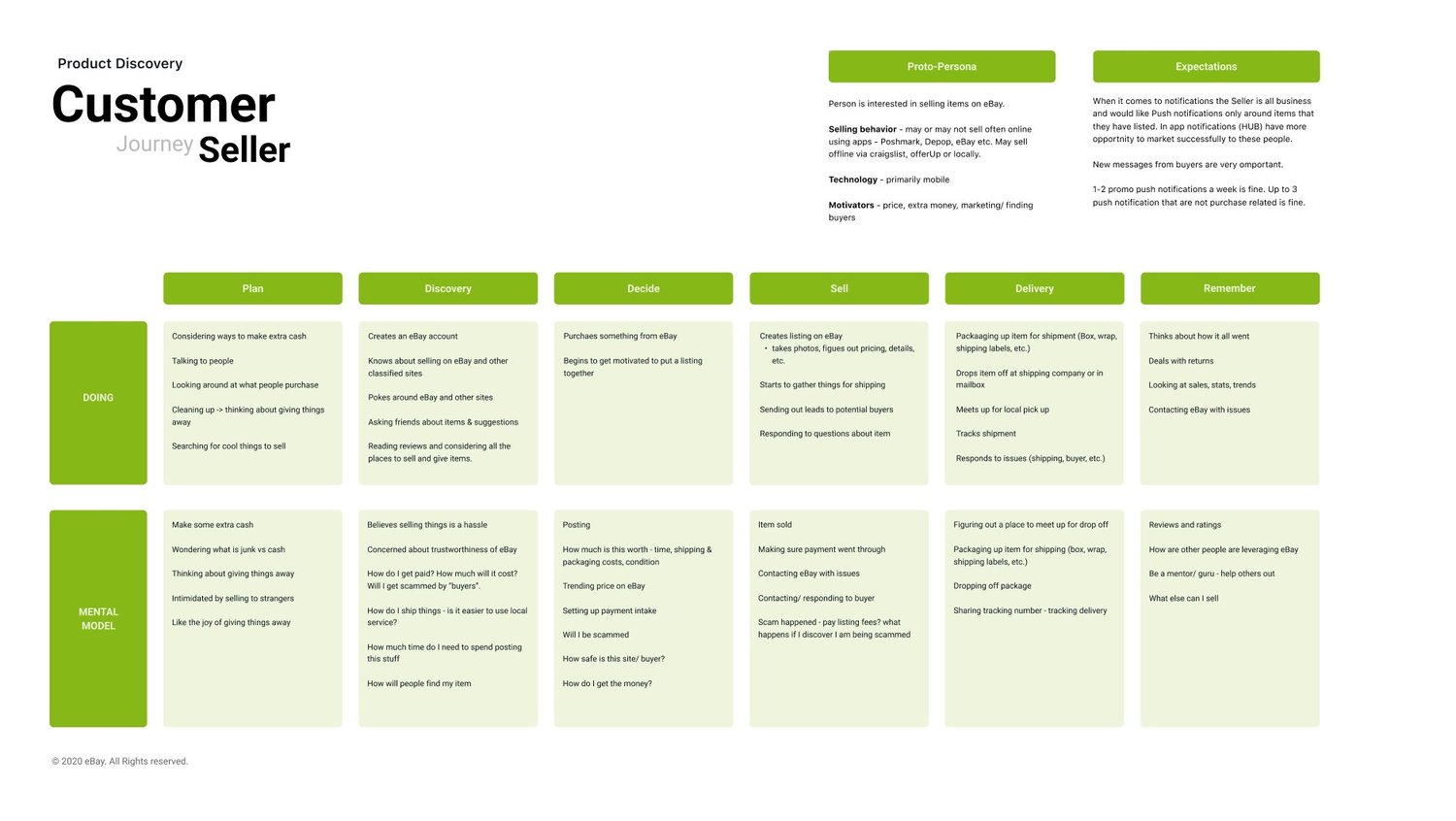
Research revealed buyers didn't want fewer notifications — they wanted more relevant ones:
- Missed price drops on watched items
- Unclear order status updates
- Notification fatigue from irrelevant alerts
- Low trust in push notification timing
This shifted the initiative from "send more alerts" to "send the right alert, at the right moment."
- Diary studies with active buyers
- Notification preference surveys
- Deal Hunters
- Repeat Sellers' Buyers
- First-time Buyers
- Price drops, availability, and shipping updates
- Order status vs. marketing messaging
Buyers didn't mind notifications — they minded irrelevant ones crowding out the ones that mattered.
A price-drop alert sent an hour late felt like noise, not help.
Deal hunters wanted more alerts; first-time buyers wanted fewer, clearer ones.
Consistently useful notifications increased tap-through rates on future alerts.
Some stakeholders prioritized notification volume as an engagement lever, while buyers consistently prioritized relevance, timing, and trust.
I advocated for a prioritization model and per-segment cadence to protect trust while still driving engagement.
- Engagement volume vs. buyer trust
- Personalization vs. simplicity
- Growth team goals vs. buyer experience
- Short-term taps vs. long-term retention
- A notification priority framework
- Segment-based cadence rules
- Clear, actionable notification content
- Consistent timing across channels
- Reusable notification templates
- Opt-in controls for buyer preference
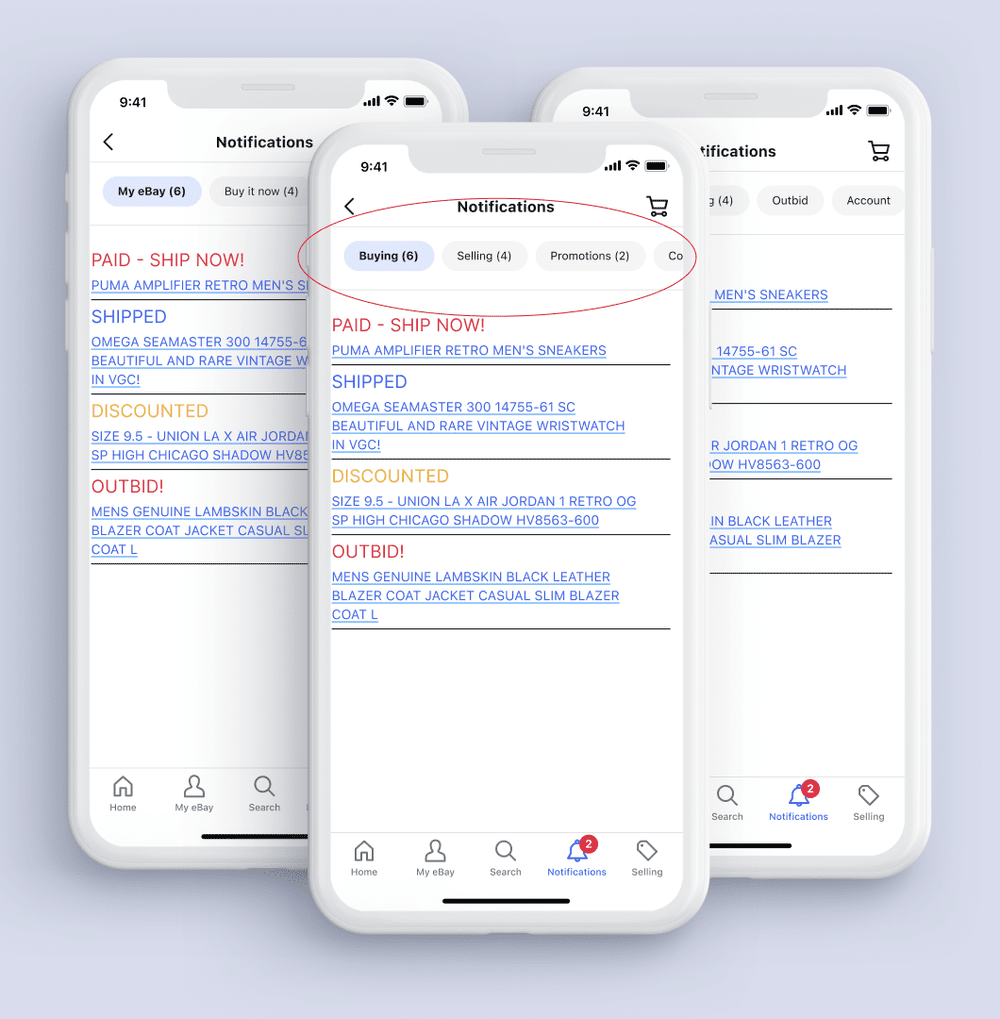
A single flat feed exposed every notification type in one undifferentiated list.
Buyers struggled to understand
- Which alerts needed action
- What was time-sensitive
- How to mute noisy categories
Buyers thought in categories — orders, deals, account — not a single timeline.
We moved to a categorized notification center with per-category controls and priority sorting.
Added a layer of navigation in exchange for clarity and buyer control.
Early concepts packed every available detail into each notification card.
Buyers scanned past dense cards without registering the one detail that mattered.
A single clear call-to-action outperformed dense, multi-detail cards.
- One primary message per card
- Visual hierarchy for time-sensitive alerts
- Single clear call-to-action
- Standardized card templates by category
Reduced information density per card to improve scan speed and action-taking.
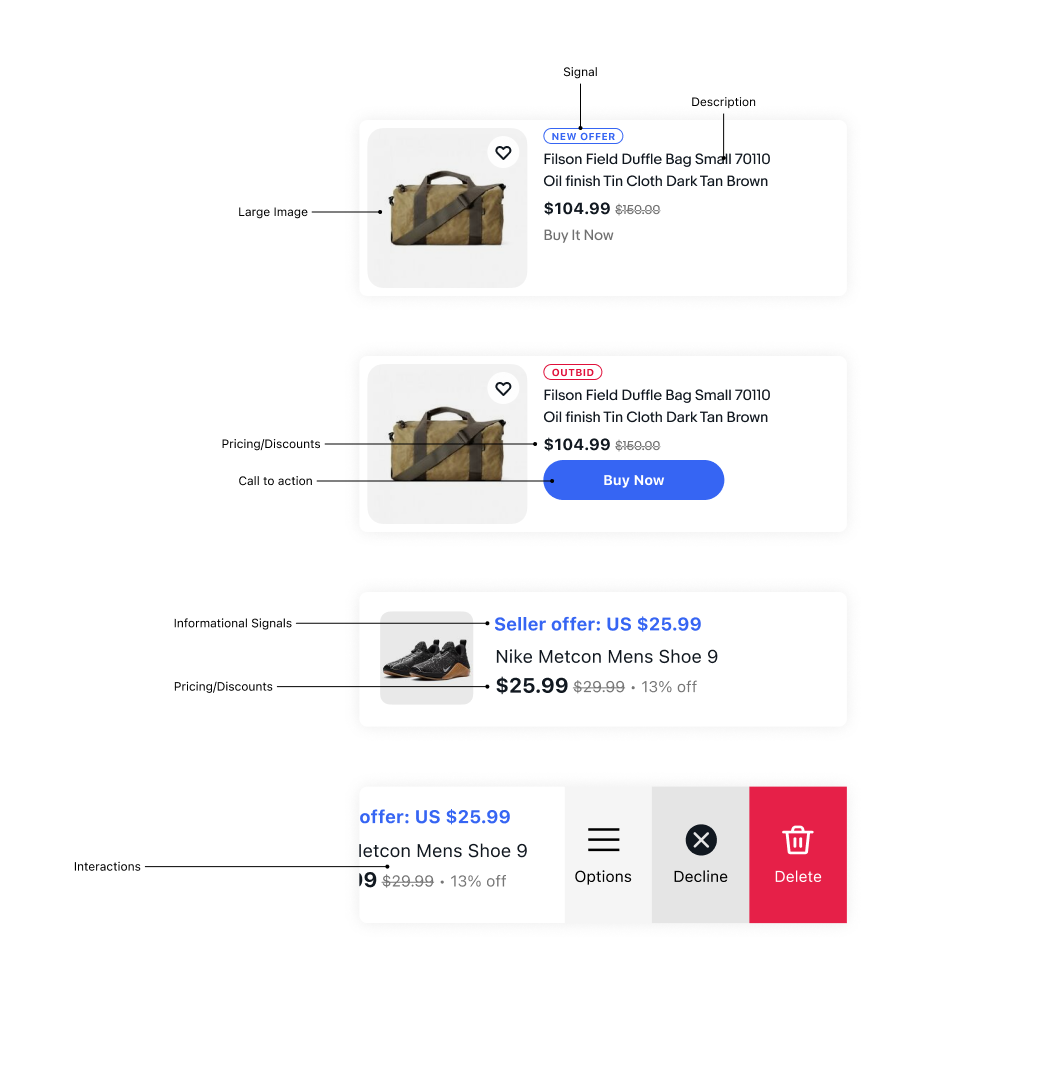
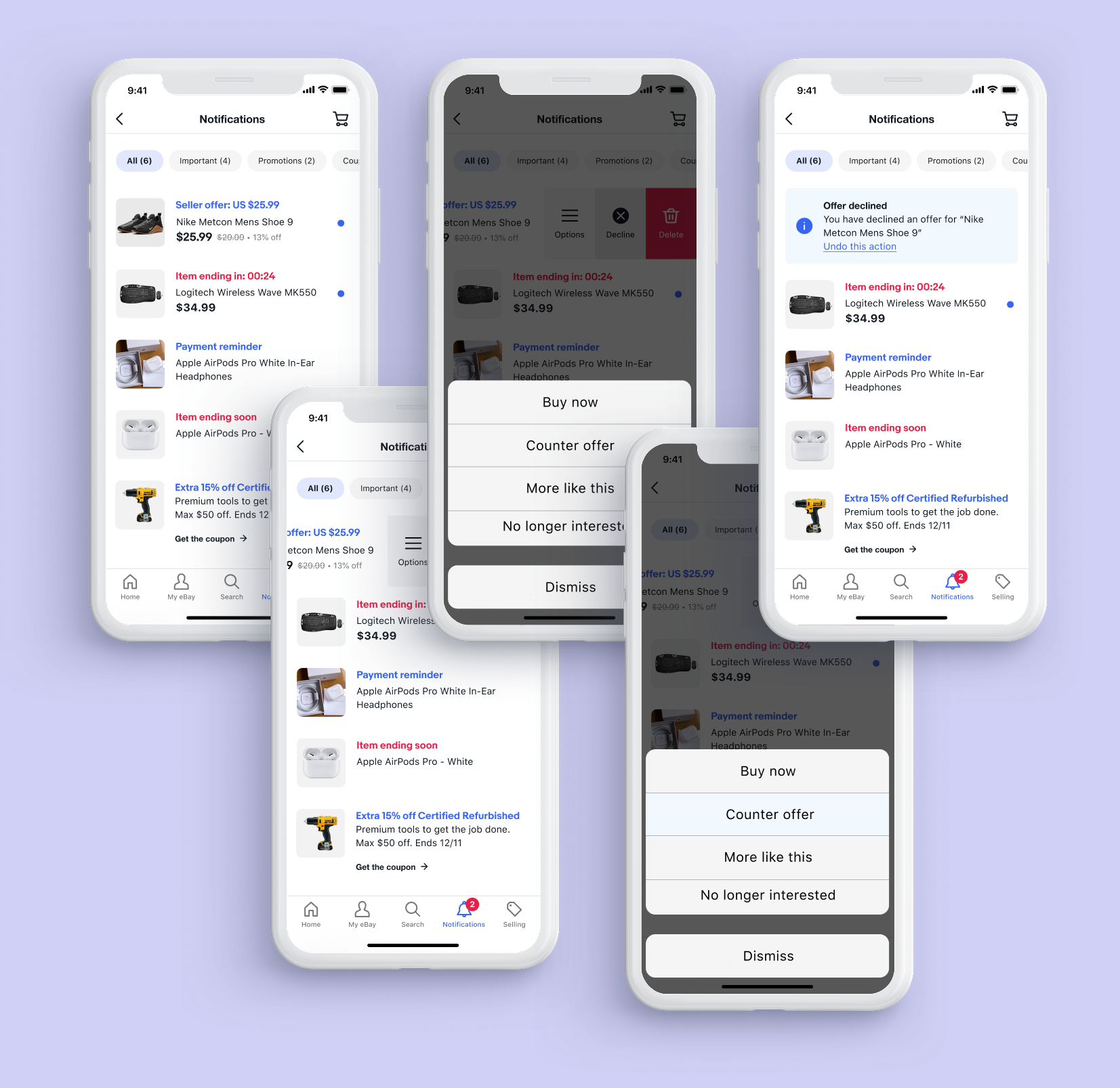
A major challenge was standardizing notification content across dozens of teams sending alerts to the same inbox.
- Standardized notification card templates
- A shared priority/urgency taxonomy
- Consistent iconography by category
- Unified timing and frequency rules
- Reusable copy patterns by notification type
The goal was a notification experience that felt like one coherent voice, not dozens of competing teams.
This significantly reduced inconsistency across push, email, and in-app alerts.
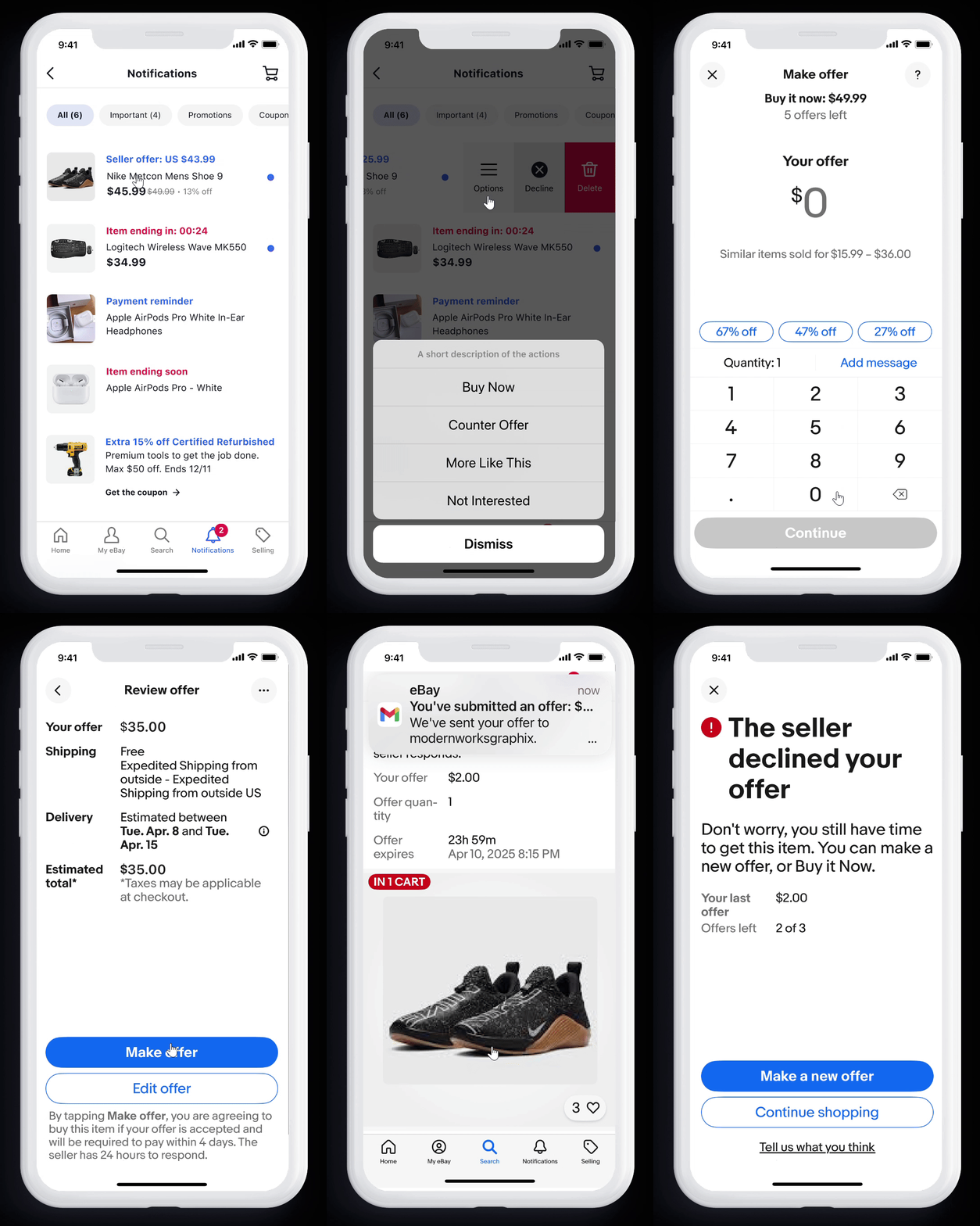
The final experience consolidated fragmented, team-by-team alerts into one coherent notifications system that felt timely and relevant to each buyer.
- Catch price drops before they expired
- Track order status without digging through email
- Tune which categories they hear from and how often
- Act on notifications with a single tap
The experience shifted notifications from noisy interruptions toward trusted, timely help.
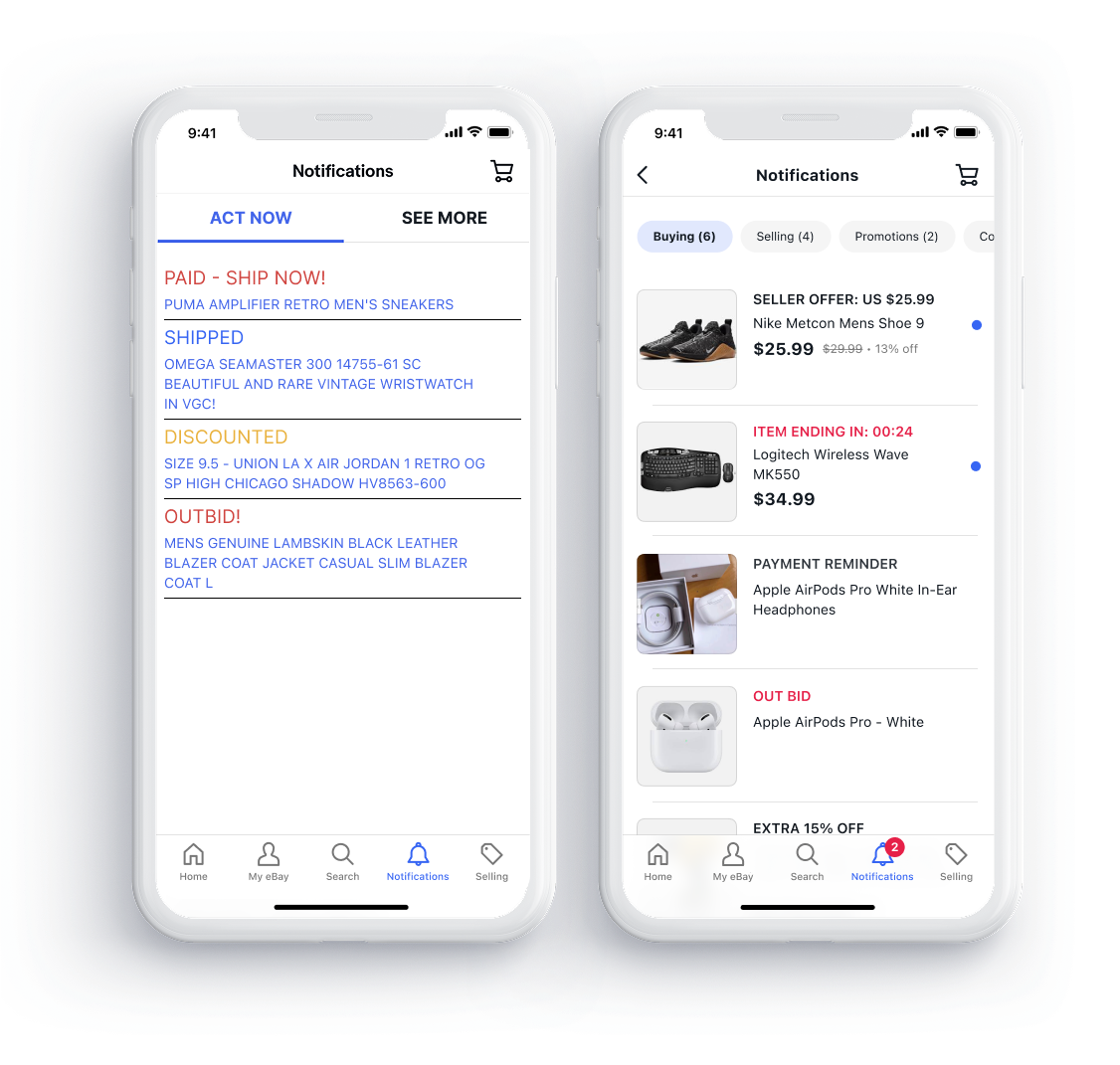
The initiative closed a critical engagement gap, giving buyers timely, relevant updates while establishing a shared framework for how eBay teams communicate with buyers.
- Reduced missed price-drop and availability alerts, protecting GMB
- Established a shared notification priority framework across teams
- Improved trust and tap-through on future notifications
- Reduced notification fatigue through segment-based cadence
- Standardized notification templates for faster team onboarding
- Created a reusable foundation for future notification types